Most of us would guess betrayal involves a loved one, a business partner, or an institution, but there’s another form of betrayal that deserves attention: self-betrayal.
What is self-betrayal?
It’s when we break trust with ourselves. Every time we abandon our own values and beliefs, our intuitions, our needs, our best interests, we break trust with ourselves. What’s worse is that we typically know when we’re doing it, and it’s usually to appease others or avoid discomfort. When this happens once, it might not pose a problem, but when we do it repeatedly, it can wreak havoc on our bodies and our minds.
In my experience, many people who experience one of the other forms of betrayal often struggle with self-betrayal too.
Why?
Overcoming betrayal isn’t always so simple. It can involve confrontation, setting boundaries, radical self-care, managing emotions, implementation of healthy habits, revisiting relationships, and healing. That makes it easy to betray ourselves. It’s hard to navigate. It’s hard to see clearly. You might even be suffering from PTSD, depression, or anxiety at a severe level. It’s also hard to be vulnerable to get the help you need. It’s hard to confront your betrayer. Sometimes, it’s hard just to keep going. It makes avoiding and denial look appealing. It might even make people-pleasing and excuses look attractive.
So, what’s the big deal?
Recently, I’ve observed self-betrayal more and more, but instead of being the product of a different form of betrayal, it’s isolated, so the only betrayer is our self. While there are many explanations, the most glaring one appears to be largely circumstantial, offering a reflection of the times we’re in. We’re leaving our old norms and implementing new ones. There are three trends I’ve been watching that I tend to believe have a significant influence on our decision-making, and the pressure around it. As always, accountability and ownership is on the individual, but the world we live in has made some unhealthy behaviors all too convenient, and have made justification all too tempting as well.
The three trends I’m referencing are digital access, trust, and affordability.
Digital access has opened the door to all kinds of unhealthy behaviors. As a result, self betrayal and emotional affairs are rising. Remember, betrayal doesn’t have to be something that leads to any form of infidelity. It could be that you’re moving too fast and your pace is unsustainable. It could come in the form of conformity, when we feel the need to fit in or keep up with the “Joneses” on social media. It could be even simpler than that. Maybe doomscrolling is preventing you from getting the rest you need. The reality is excuses are easier than ever to find today. Suppose you know your body needs to get up and move around, even something as small as using Door Dash can be a form of self-betrayal. Convenience has become costly.
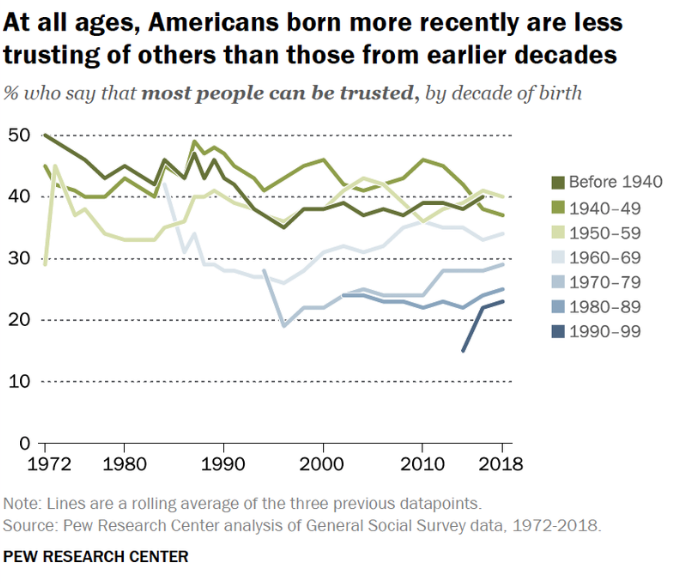
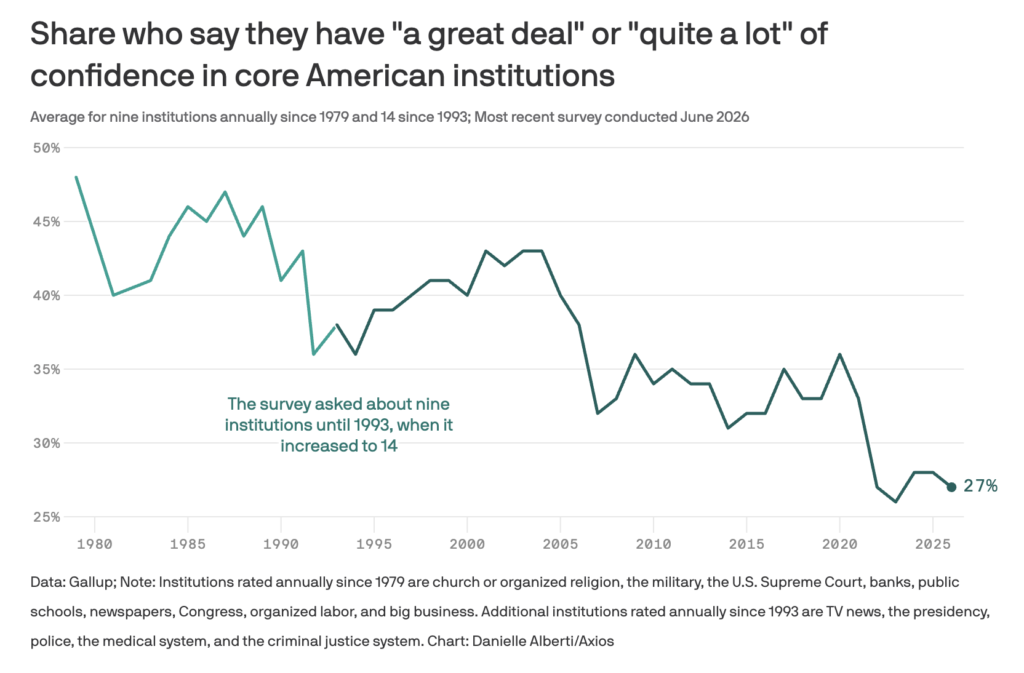
As far as trust goes, it’s pretty clear. America is going through it. According to a 2023-2024 study, The Pew Research Center shows only 34% of American’s trust each other. If you look below, you can see trust in each other has been trending down for a while, reflecting trust isn’t even 30% amongst anyone born after 1970, as of 2018. Then, if you look at the next image below that, you will see America’s confidence in our core institutions, and it’s pretty bleak
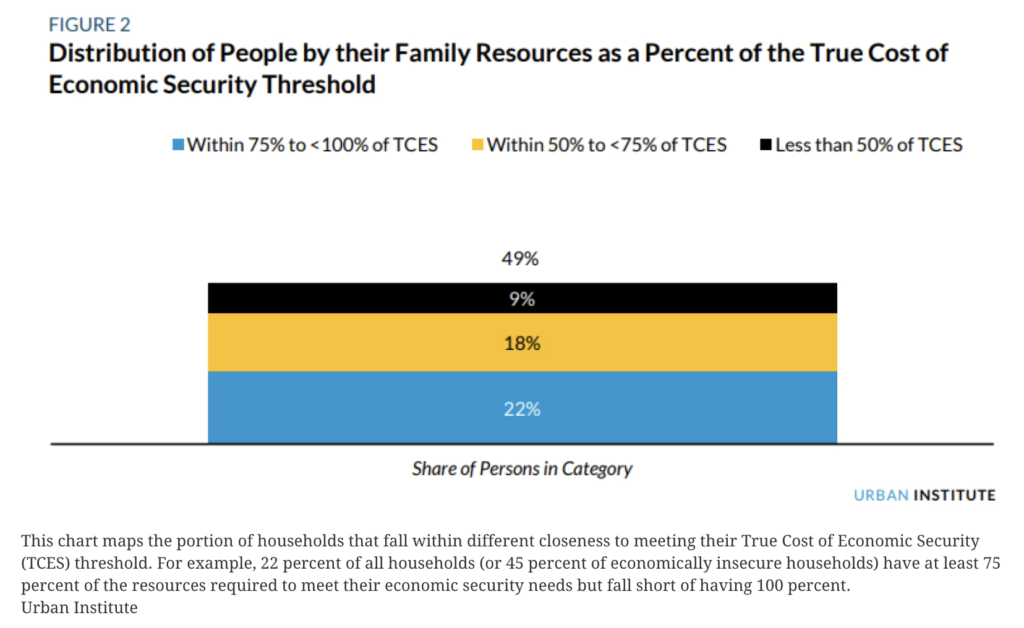
The last trend I’ve been following relates to affordability and the cost of living. By now everyone is well aware of inflation. For data gurus, there’s a plethora of charts to choose from (wage growth vs productivity is another favorite), but I’ve selected the True Cost of Economic Security, published by the Urban Institute. Here’s their description: “Unlike the federal poverty line, which measures acute material hardship, the TCES calculates the resources a household needs to fully participate in modern society—including housing, food, child care, health care, technology, taxes, and emergency savings—without undue restrictions”. As you can see below, 49% of the U.S. population is economically “insecure,” meaning they live below the TREC threshold.
The point is there’s a lot of pressure on the decisions we’re making today, and plenty of stress. Betraying yourself doesn’t make you a “bad” person, but it will hinder you, and it can lead to some serious self-sabotage. So, while I’m not here to justify any bad habits or bad behavior, I hope this provides some peace of mind for anyone who’s unable to see clearly. Betrayal lights our nervous systems on fire, making it difficult to tap into our intuition, and even more difficult to restore trust. In case you were wondering if any of what you’re experiencing is a projection, maybe this offers more clarity. It’s not just you. A lot of us are struggling.
Just remember, tough times don’t last. Tough people do. Be good to yourself!
Much love 💪❤️